It looks deceptively simple: count the number of squares in a grid. Yet 92% of people who attempt this puzzle fail to get the correct answer. The reason lies not in complexity, but in how our brains process overlapping shapes.
En bref
- —92% of people fail to count correctly
- —The correct answer is 14 squares
- —Most people miss the larger overlapping squares
A Puzzle That Looks Easy — But Isn’t
At first glance, the challenge seems trivial. You are presented with a 3×3 grid and asked to count the squares. Most people glance at it, count nine small boxes, and move on — confident they have the right answer.
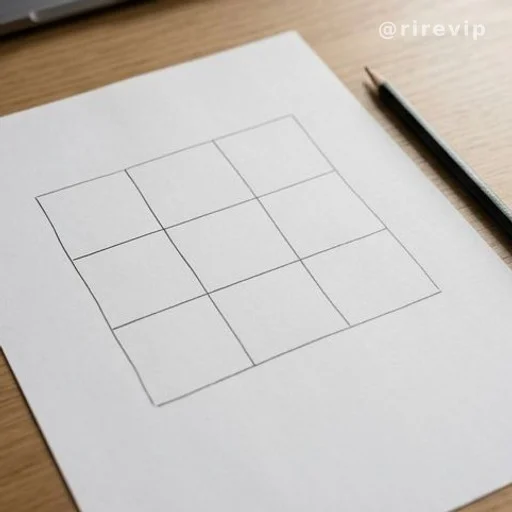
That confidence, however, is almost always misplaced. According to the puzzle, 92% of people who attempt it walk away with the wrong total. The trap is not a trick of design or an optical illusion — it is a failure to think systematically about what a “square” actually includes.
The puzzle has circulated widely as a party game and a casual brain teaser, precisely because the gap between how easy it feels and how easy it actually is makes for a striking and shareable moment.
Why Most People Get It Wrong
The most common mistake is counting only the nine small individual squares that make up the grid. This is the most visible layer of the puzzle, and it is where the majority of people stop.
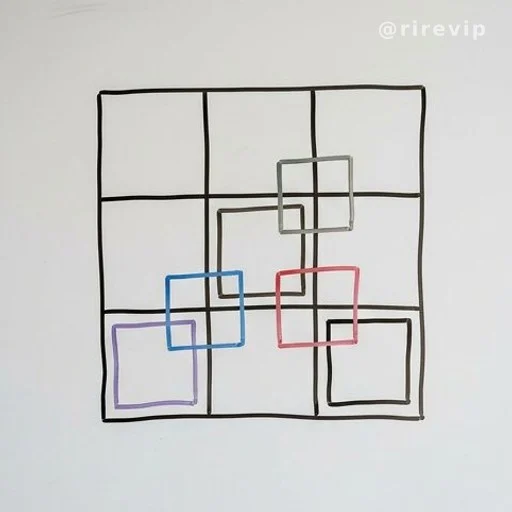
What most people overlook is that larger squares can be formed by combining smaller ones. In a 3×3 grid, it is entirely possible to identify squares made up of four cells, or even the single large square that encompasses the entire grid.
This is a classic example of how our visual perception tends to focus on the most obvious units and ignore composite shapes. The brain defaults to the simplest interpretation, which in this case leads directly to an incorrect answer.
Why grids make us miscalculate
Visual counting puzzles based on grids have been used for decades in cognitive research and recreational mathematics. They exploit a well-documented tendency in human perception: we identify the most obvious units in a scene and rarely search for composite or overlapping shapes. A 3×3 grid is one of the simplest versions of this type of puzzle, yet it reliably produces errors in the vast majority of people who attempt it without a systematic method.
Breaking Down the Correct Answer: 14
The correct total is 14 squares. To reach this number, you need to count every possible square, regardless of size.
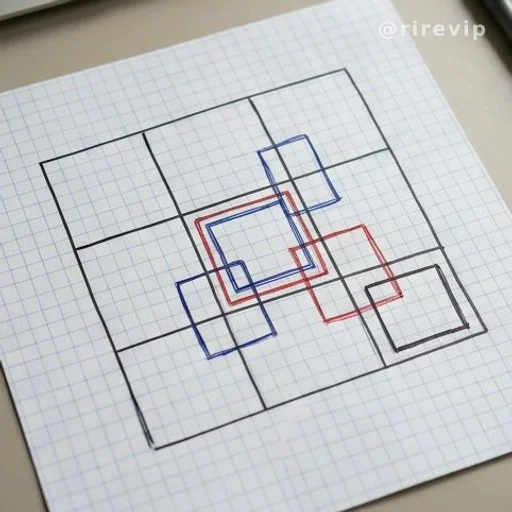
Starting with the smallest unit: the 3×3 grid contains 9 small squares, each occupying a single cell. That is the baseline most people reach.
Adding the next size up: within a 3×3 grid, you can identify four squares made up of 2×2 cells. These are formed by taking any four adjacent cells arranged in a square — and there are exactly four such combinations possible within the grid.
Finally, there is one large square that covers the entire 3×3 grid itself. Adding these together: 9 + 4 + 1 = 14. That is the complete and correct answer.
More Than a Party Trick: What These Puzzles Reveal
Beyond the fun of the challenge, puzzles like this one are widely used to illustrate how human perception and cognitive skills can be systematically biased. We tend to see what we expect to see, rather than what is actually there.

The puzzle works particularly well as a social game. Challenging friends or family to count the squares — without revealing the method — consistently produces a range of wrong answers, making the reveal of 14 all the more satisfying.
Exercises that require methodical thinking and the ability to consider a problem from multiple angles are often associated with brain training and attention to detail. Whether in a classroom, at a dinner table, or shared online, the square-counting puzzle remains a simple but effective test of structured reasoning.
The square-counting puzzle is a small but telling demonstration of how easily our perception can mislead us. The answer — 14 — is entirely logical once you apply a structured approach: count by size, not by instinct. Only 8% of people arrive at the correct total on their first attempt, which is precisely what makes this puzzle such an effective and enduring challenge. Next time you see a grid, think in layers.