A deceptively simple riddle has been making the rounds online, stumping countless readers around the world. It involves a mother named Penny and her five children — and the answer has been in front of you the whole time.
En bref
- —Penny’s five children seem named after months
- —Most readers guess ‘May’ — and get it wrong
- —The real answer is hidden in the question itself
A Riddle That Has the World Scratching Its Head
The riddle reads as follows: “Penny has 5 children. The 1st kid is named January. 2nd kid is named February. Her 3rd is called March. 4th is April. What is the name of the 5th? Read carefully.”
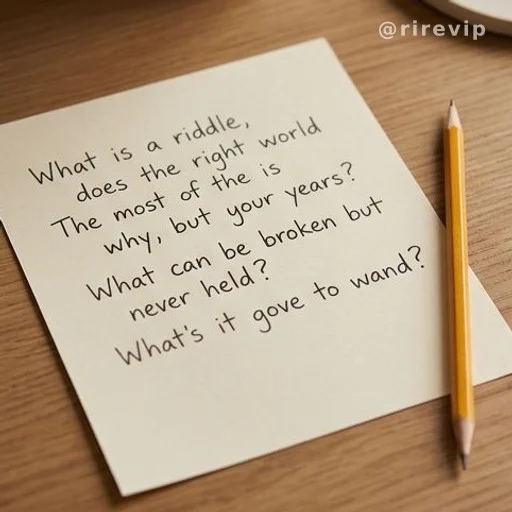
At first glance, the puzzle appears straightforward. Four children are named after the first four months of the year, and the reader is invited to name the fifth. The instruction to “read carefully” is easy to overlook — yet it is the most important part of the entire riddle.
The challenge has been described as causing “many headaches around the world,” with users debating the answer across social media and messaging platforms. The key, as the riddle itself suggests, lies in slowing down and paying close attention.
Why Almost Everyone Guesses ‘May’
The most common wrong answer is May. The logic is intuitive: January, February, March, and April are the first four months of the year, so the fifth child must logically be named after the fifth month.
This is exactly the trap the riddle sets. By establishing a clear pattern — months of the year in sequence — it nudges the reader’s brain toward an automatic, pattern-based response. Cognitive shortcuts, sometimes called heuristics, lead most people to fill in the blank without re-reading the question.
The instruction “Read carefully” embedded in the riddle is a direct warning that something is off. Yet under time pressure or casual reading, most people skip past it entirely, confident they already know where the puzzle is heading.
Why riddles go viral
Riddles that exploit language structure and reader assumptions have long been popular online, spreading rapidly through social media and messaging apps. They work because they exploit the gap between how we expect language to function and how it actually does. Puzzles like this one are also frequently used in brain training and educational contexts to sharpen critical reading skills.
The Real Answer: It Was There All Along
The correct answer is What. The final line of the riddle — “What is the name of the 5th?” — is not a question. It is a statement. The fifth child’s name is What, and it has been explicitly stated in the text.

The riddle works because of punctuation. There is no question mark at the end of the final sentence. Without that punctuation, the sentence functions as a declaration: the name of the fifth child is What.
As the source explains: “The riddle isn’t asking a question; it is giving a statement.” The answer was always visible — it was up to the reader to interpret the structure of the sentence rather than react to its apparent meaning.
What This Riddle Reveals About How We Read
Beyond the fun of the puzzle, this riddle highlights something important about human reading habits. Most people read for meaning and pattern, not for precise grammatical structure. When a sentence looks like a question, the brain processes it as one — even when the punctuation tells a different story.

Engaging regularly with riddles and logic puzzles is widely considered a useful exercise for cognitive skills and attention to detail. Challenges like this one train the mind to slow down, question assumptions, and re-examine information before drawing conclusions.
Whether you got it right on the first try or needed a hint, the riddle serves its purpose: it forces a moment of genuine mental effort. And as the source notes, “More riddles are coming your way to engage your brain” — suggesting that this kind of playful brain training has a loyal and growing audience worldwide.
The Penny riddle is a small but effective lesson in the power of careful reading. The answer — What — was never hidden; it was simply waiting for readers to stop and look at the sentence as it was written, not as they assumed it was meant. In an age of fast scrolling and automatic pattern recognition, puzzles like this serve as a useful reminder: sometimes the most important detail is the one hiding in plain sight.