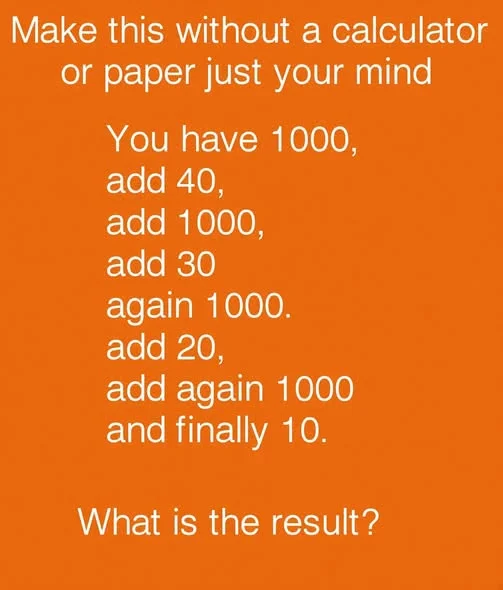
A simple arithmetic problem designed for primary school children is stumping a surprising number of adults online. The challenge, which requires no calculator, tests whether you still remember one of the most fundamental rules taught in early mathematics education: the order of operations.
En bref
- —A primary school math problem is tripping up many adults
- —The correct answer is 288 — did you get it right?
- —Order of operations is the key rule most people forget
A Problem Designed for Children — Yet Adults Struggle
The puzzle making the rounds is described as a classic math problem, the kind routinely given to children in primary school. Despite its apparent simplicity, it has proven surprisingly difficult for grown-ups who encounter it years after leaving formal education.
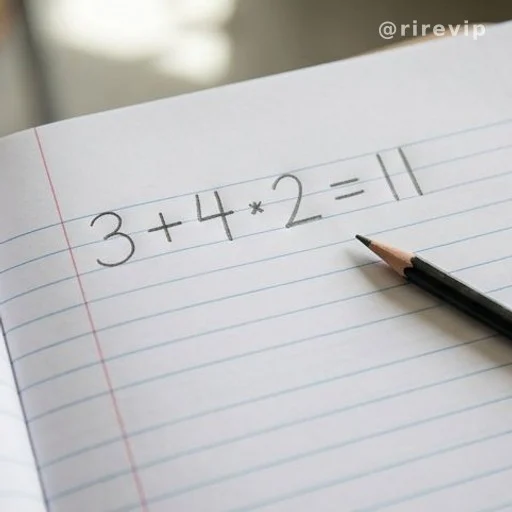
The reason most adults fail is not that the arithmetic is complex. It is that solving it correctly depends entirely on remembering a specific rule — one that is taught early in school but easily forgotten over time.
The problem serves as a reminder that foundational knowledge, if left unpractised, fades. Even basic skills learned during school education can slip away without regular use.
What is the order of operations?
The order of operations is a fundamental rule in mathematics that determines the sequence in which calculations must be performed. It is typically taught in primary school and establishes that parentheses are resolved first, followed by multiplication and division (left to right), then addition and subtraction. Without this rule, the same expression could produce multiple different results.
The Rule Everyone Learned But Many Have Forgotten
The key to solving this problem lies in the order of operations — a set of rules that dictates the sequence in which calculations must be performed. It is, as the source notes, “one of the first things we learn in school.”
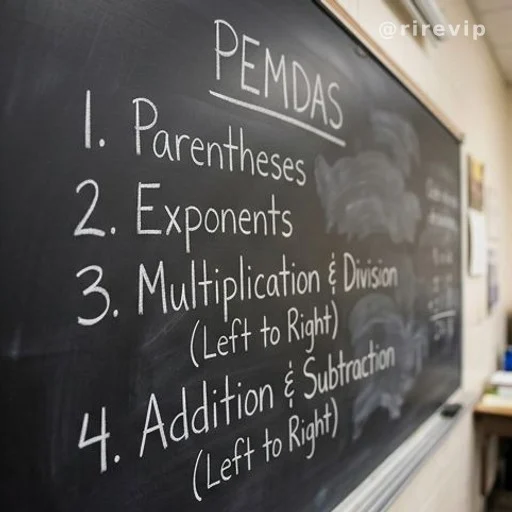
The order of operations establishes that calculations inside parentheses must be completed first, before any multiplication or division is carried out. Ignoring this sequence — or applying operations in the wrong order — leads directly to an incorrect result.
This rule is not optional or a matter of interpretation. It is a universal mathematical convention, and failing to apply it is the single most common reason people arrive at the wrong answer.
Solving It Step by Step: How to Reach 288
The problem involves the expression 48 ÷ 2(9 + 3). The first step is to resolve what is inside the parentheses: 9 + 3 = 12. The expression then becomes 48 ÷ 2 (12).
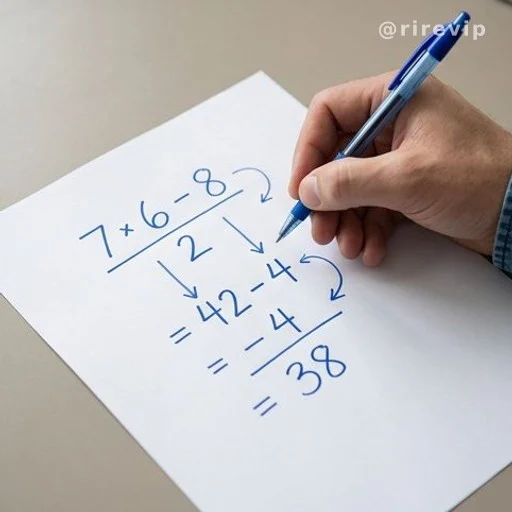
Removing the parentheses reveals an implied multiplication, giving: 48 ÷ 2 × 12. From this point, the rule is to work from left to right.
Dividing first: 48 ÷ 2 = 24. Then multiplying: 24 × 12 = 288. The correct answer is therefore 288. Any other result comes from applying the operations out of sequence.
Why This Kind of Challenge Resonates Online
Puzzles like this one spread widely because they tap into a universal experience: the gap between what we once knew and what we remember today. Most people who attempt it are confident they will get it right — which makes a wrong answer all the more striking.
Beyond the entertainment value, these challenges carry a genuine educational point. They demonstrate how easily foundational school learning can erode, and how a single forgotten rule can completely change an outcome.
For anyone who got the answer wrong, the takeaway is straightforward: the order of operations matters, and revisiting the basics of arithmetic is never a waste of time.
This seemingly simple puzzle is a useful reminder that mathematical rules learned during school education do not always stay with us into adulthood. The correct answer — 288 — is only reachable by strictly respecting the order of operations: parentheses first, then left-to-right for multiplication and division. Whether you got it right or not, the exercise highlights the enduring value of foundational learning.