A deceptively simple maths puzzle has been circulating online, leaving thousands of people second-guessing themselves. The question involves a man buying and selling a goat — twice — and asks how much profit he made in total. The answer is simpler than most expect.
En bref
- —A man buys and sells a goat twice
- —Most people struggle to find the correct answer
- —The total profit is $20, earned in two steps
A Puzzle That Has Stumped Thousands
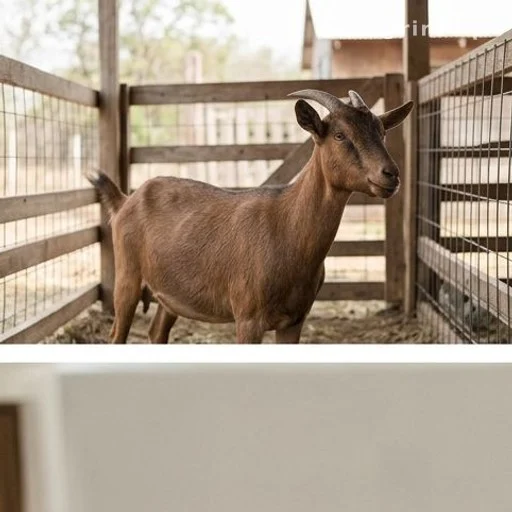
The riddle is straightforward on the surface: a man buys a goat for $60, sells it for $70, buys it back for $80, and sells it one final time for $90. The question is simple — how much did he make overall?
Despite its apparent simplicity, the puzzle has caused widespread confusion online. Many readers find themselves reading the problem multiple times before arriving at an answer, and a significant number still get it wrong on their first attempt.
The challenge lies not in complex mathematics, but in the way the human brain tends to overcomplicate straightforward sequences of transactions. It is a classic example of a problem that looks harder than it actually is.
Why brain teasers go viral
Logic puzzles and riddles have long been popular online because they invite readers to test themselves and share results. Problems involving money and transactions are particularly effective at generating debate, as different people apply different reasoning methods and often arrive at conflicting answers.
Breaking Down the Two Transactions
The key to solving the puzzle is to treat each transaction separately rather than trying to calculate them all at once. The man conducts two distinct buy-and-sell operations, each of which can be analysed independently.
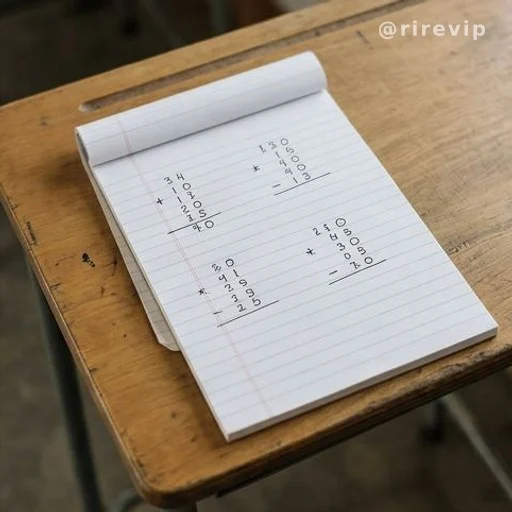
In the first transaction, he buys the goat for $60 and sells it for $70. The profit here is straightforward: $70 – $60 = $10.
In the second transaction, he buys the goat back for $80 and sells it again for $90. Once more, the profit is clear: $90 – $80 = $10.
When you add both profits together — $10 + $10 — the total is $20. Understanding basic personal finance and profit calculation, even at this small scale, requires keeping each operation distinct in your mind.
Why Our Brains Get It Wrong
The reason so many people struggle with this puzzle is rooted in cognitive bias. When we read a sequence of numbers — $60, $70, $80, $90 — our brains instinctively look for a single, unified pattern rather than breaking the sequence into separate events.
Some people incorrectly conclude the answer is $10, focusing only on the difference between the first purchase price ($60) and the final sale price ($90), minus the repurchase ($80). Others arrive at $30 by adding all the gains without accounting for the costs.
This type of mental shortcut, while useful in many everyday situations, can lead us astray when careful, step-by-step financial reasoning is required. It is a reminder that even simple arithmetic deserves our full attention.
The Value of Logic Puzzles in Everyday Life
Beyond the fun of a brain teaser, puzzles like this one serve a genuine purpose. They train the mind to slow down, re-read information carefully, and resist the urge to jump to conclusions — skills that are directly applicable to real-world decision-making.

Whether managing a household budget or evaluating a financial transaction, the habit of breaking a problem into its individual components is an invaluable one. The goat puzzle, in its own small way, is a practical exercise in that discipline.
For those who solved it correctly on the first try, it is a well-earned moment of satisfaction. For those who did not, the explanation makes it clear that the answer was always within reach — it simply required a more methodical approach.
The goat puzzle is a small but effective demonstration of how easily our minds can be misled by a simple sequence of numbers. The correct answer — $20 — requires nothing more than separating two transactions and calculating each profit individually. The real lesson here is not about goats or money, but about the importance of methodical thinking: a habit that pays off well beyond any brain teaser.