A simple riddle, two girls, two directions, and a question that stumps most people at first glance. The answer requires no trick, no mirror, and no magic — only the willingness to question what you assumed was true. This puzzle is a perfect lesson in how the brain fills in gaps it was never asked to fill.
En bref
- —Two girls face South and North yet see each other
- —No mirrors, no tricks — just a false assumption
- —They are simply standing face to face
A riddle that sounds impossible
The setup is deceptively simple: two girls, one facing South, one facing North, and yet they can see each other without the use of mirrors. Read quickly, the scenario feels like a contradiction.
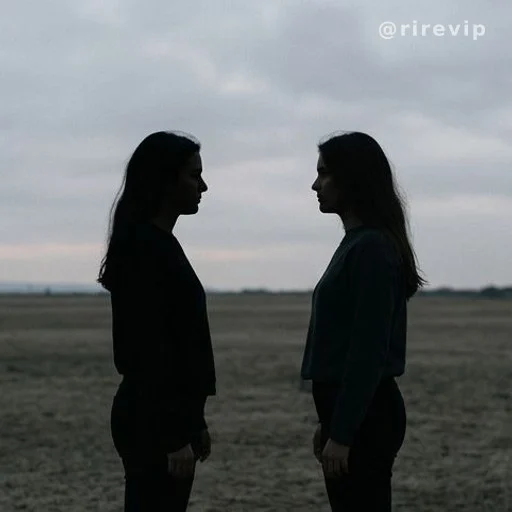
Most people immediately picture the two girls standing back to back, each staring away from the other into the distance. That mental image makes the riddle feel unsolvable — and that is precisely the point.
The riddle does not say the girls are back to back. It does not say they are far apart. Those details are assumed by the reader, not stated in the puzzle. The trap is entirely constructed inside your own mind.
The answer hidden in plain sight
The solution is straightforward once the false assumption is removed. The two girls are standing directly facing each other. One looks toward the South, the other looks toward the North — and because they face one another, they have a clear, unobstructed view of each other.

There is no paradox. If you stand in front of someone and face them, you are each looking in opposite compass directions. That is simply how geometry works.
The riddle exploits the word “facing” — which describes a direction of gaze, not a physical arrangement relative to another person. The moment you separate those two concepts, the answer becomes obvious.
Classic logic riddles
Logic riddles have been used for centuries to test and train reasoning skills. They work not by providing false information, but by exploiting the assumptions readers bring to a problem. Many are used today in education and cognitive training to develop clearer, more disciplined thinking.
Why our brain gets it wrong
The riddle works because the human brain is wired to fill in missing information automatically. When we read a scene, we construct a full mental picture — even when the text gives us only partial details.
In this case, most readers unconsciously add the detail that the girls are standing back to back, because that is the most common way to picture two people facing opposite directions. It is a cognitive shortcut, and it leads directly to the wrong conclusion.
This tendency is well documented in critical thinking and problem solving research. We do not just read what is written — we read what we expect to be written. Riddles like this one are a simple but effective way to expose that habit.
The lesson beyond the puzzle
The final line of the riddle’s answer captures it well: “Sometimes the hardest riddles are solved by questioning the assumptions we automatically make.” That principle extends well beyond word puzzles.

In everyday reasoning — whether in a professional context, a debate, or a personal decision — unexamined assumptions are often the root cause of flawed conclusions. The information was never wrong; the frame around it was.
This riddle, short as it is, serves as a reminder that slowing down and questioning the obvious is not a sign of overthinking. It is the first step toward actually thinking clearly.
This riddle asks nothing complicated. It requires no advanced knowledge, no calculation, and no lateral leap of imagination. It only asks you to read exactly what is written — and nothing more. The real challenge, as it turns out, is resisting the urge to add details that were never there. That is a skill worth practising well beyond the puzzle page.