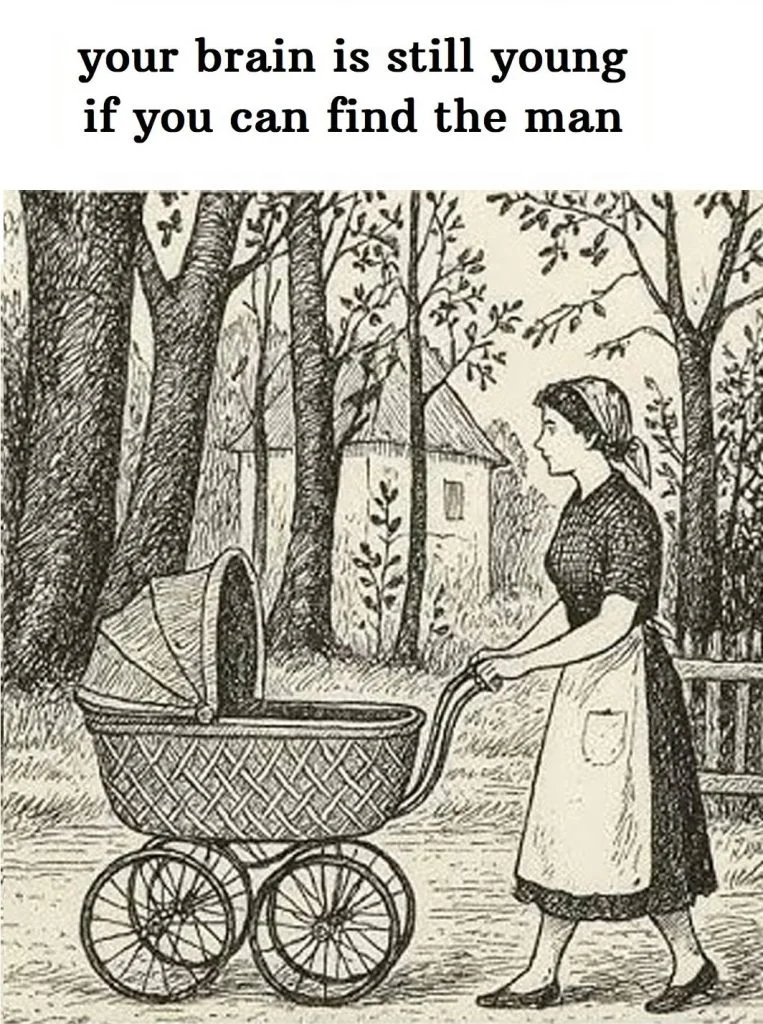
A deceptively simple riddle about a woman named Jenny and her children has been circulating widely online, challenging readers to think carefully before jumping to conclusions. The puzzle looks like a straightforward math problem — but the real trick lies in the wording. Thousands have been caught off guard by an answer that is far simpler than expected.
En bref
- —A riddle about Jenny’s kids is going viral online
- —The answer hinges on a subtle trick in the wording
- —Most people get it wrong at first glance
A Riddle That Has the Internet Stumped
Solving riddles has become one of the most popular pastimes online, drawing in millions of people who enjoy testing their wits against a well-crafted puzzle. Whether shared among friends or posted on social media, these brain teasers tap into a universal competitive instinct.
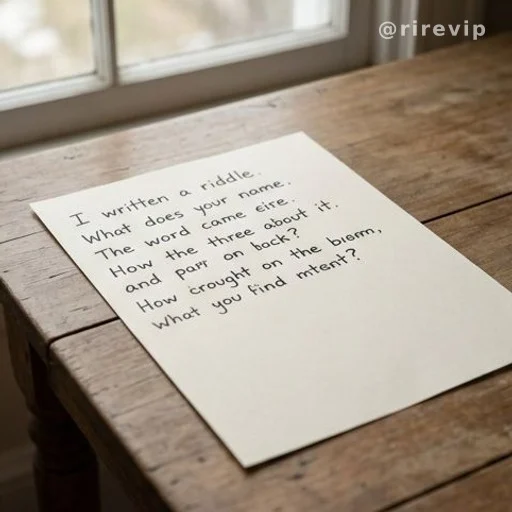
The latest riddle to capture widespread attention involves a woman named Jenny. The challenge reads: “Jenny had her first kid when she was 18, and every 2 years she had 1 kid. Now she is 33. How many kids does she have now?”
At first glance, the puzzle appears to be a simple arithmetic exercise. Most readers instinctively reach for a calculator or start counting on their fingers — and that is precisely where the trap is set.
Why online riddles are so popular
Riddles and brain teasers have surged in popularity on social media as a form of light entertainment and mental exercise. They are widely shared because they encourage interaction — people love to debate the answer with friends and family. Their appeal lies in their simplicity: no special knowledge is required, just careful thinking.
Why Riddles Work: The Power of Thinking Outside the Box
Riddles have long been valued as a tool for family learning and mental stimulation. They encourage participants to challenge their first instinct and look beyond the obvious — a skill that is harder to apply than it sounds.
The key to solving most riddles is resisting the urge to take every word at face value. Language is flexible, and a single sentence can carry more than one meaning depending on how it is read.
As the source notes, riddles are “often tricky, and it is important to try to think a little outside the box to figure them out.” This particular puzzle is a textbook example of that principle in action, using everyday language to construct a subtle misdirection.
The Trick Hidden in Plain Sight
The riddle states that Jenny had her first child at age 18 and “every 2 years she had 1 kid.” Most readers interpret this as Jenny giving birth to a new child every two years, leading them to calculate a total based on the gap between age 18 and age 33.
But that interpretation is where the misdirection takes hold. The phrase “every 2 years she had 1 kid” can equally be read as her repeatedly having the same one child — not a new one each time.
This is the classic mechanics of a wordplay riddle: the sentence is grammatically ambiguous, and the puzzle exploits that ambiguity to lead the reader down the wrong path. Brain training exercises like this one are specifically designed to expose the assumptions we make when reading quickly.
The Answer: Simpler Than You Think
The intended answer to the riddle is 1 kid. The trick is entirely in the wording: the statement never says Jenny had another child every two years — only that she had 1 kid every two years, which can simply mean the same child, repeatedly referenced.
As the source points out, “as often happens with riddles, it’s easier than it seems.” Once the linguistic sleight of hand is revealed, the answer feels almost obvious — which is exactly what makes these puzzles so satisfying to share.
The riddle serves as a reminder that slowing down and reading carefully can make all the difference. In a world of fast scrolling and quick reactions, taking an extra moment to question your assumptions remains one of the most valuable mental habits.
The Jenny riddle is a perfect illustration of how a few carefully chosen words can completely change the meaning of a sentence. Its viral success is no accident: it is short, accessible, and delivers a satisfying twist that makes people want to share it immediately. The next time a riddle seems straightforward, it may be worth pausing — the answer is often hiding in plain sight, tucked inside the wording itself.