They look simple at first glance, but thousands of people get them wrong every day. Two classic riddles — one about a family, one about a mysterious object — are making the rounds online and proving that common sense is not always enough to crack a good puzzle.
En bref
- —A family riddle stumps thousands online
- —The answer hinges on one shared sister
- —A second riddle: cities, oceans, but no water
The Family Riddle That Trips Everyone Up
The first riddle reads as follows: “Your parents have six sons, including you. Each son has one sister. How many people are in the family?” Most people instinctively reach for a wrong answer, and they are far from alone.
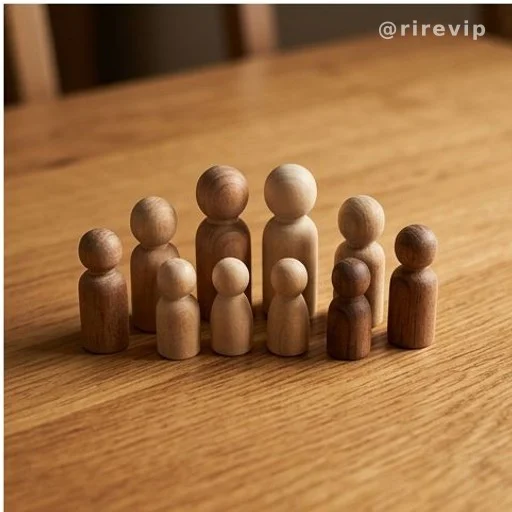
The trap is subtle. When you read that each son has one sister, it is easy to multiply: six sons, six sisters. But that is exactly the mistake the riddle is designed to provoke.
The correct answer is 9 people: two parents, six sons, and just one sister. All six brothers share the same single sister — she is not duplicated for each of them. Once you see it, the logic is airtight.
Why Our Brains Fall for the Trick
Riddles like this one work because they exploit a natural mental shortcut. When we read a list of repeated elements — six sons, each with a sister — our brain automatically assumes each instance is unique. This is a well-documented pattern in everyday problem-solving.
The challenge is not about knowledge. It is about slowing down and reading more carefully. The riddle does not lie; it simply lets the reader’s assumptions do the misleading.
This is why puzzles remain a popular form of brain training. They force the mind to pause, re-read, and question its first instinct — a skill that is useful well beyond solving riddles.
Why riddles work the way they do
Riddles are built on the gap between what is said and what the reader assumes. They do not require specialist knowledge — only careful reading and a willingness to question your first instinct. That accessibility is what has kept them popular across generations and cultures.
The Second Riddle: Cities Without Houses, Oceans Without Water
The second puzzle raises the difficulty: “It has cities but no houses, it has oceans but no water, it has forests but no trees, it has deserts but no sand. What is it?”
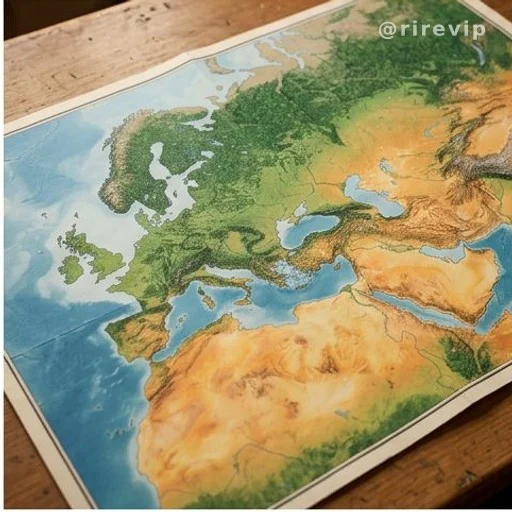
This riddle belongs to a different category. Rather than a math trap, it requires a creative leap. The answer is not found by calculating or re-reading carefully — it demands that you abandon the literal meaning of each word entirely.
The answer is a map. A map represents cities, oceans, forests, and deserts — but contains none of the physical things those words normally bring to mind. It is a representation of the world, not the world itself.
The Enduring Appeal of Classic Puzzles
Both riddles illustrate why this format has never gone out of fashion. They are short, require no equipment, and deliver an immediate sense of reward when solved — or a satisfying explanation when they are not.
According to the source, classic puzzles have seen a resurgence in popularity online, with riddle challenges spreading widely across social platforms. Many people associate them with childhood puzzle books and the simple pleasure of a good brain teaser.
The appeal is universal precisely because the rules are the same for everyone: no prior knowledge required, just the willingness to think a little differently. As the source puts it, you simply have to “think outside the box.”
These two riddles are a reminder that the simplest questions are often the trickiest. The family puzzle rewards careful reading; the map riddle rewards creative thinking. Together, they capture what makes a good brain teaser: a clear answer that feels obvious only once you know it. Whether you solved them or not, the exercise itself is the point.